
Your event may last two days.
The investment behind it lasts much longer.
Months of planning. Venue costs. Speakers. Travel. Production. Sponsors. Marketing. Employees. Executive time. Vendors. Attendees. And more meetings than anyone would care to count.
Then the event happens.
Everyone goes home.
And too often, one of the most valuable things the organization created during those few days becomes an afterthought: the content.
A corporate event brings together something that’s difficult and expensive to recreate: your people, your customers, your leadership, your partners, your expertise, and your brand all in one place.
That makes an event more than something worth documenting.
It’s a content opportunity.
And with the right planning, the photography and video captured during one event can continue creating value for your organization for months — sometimes until it’s time to do the whole thing again.
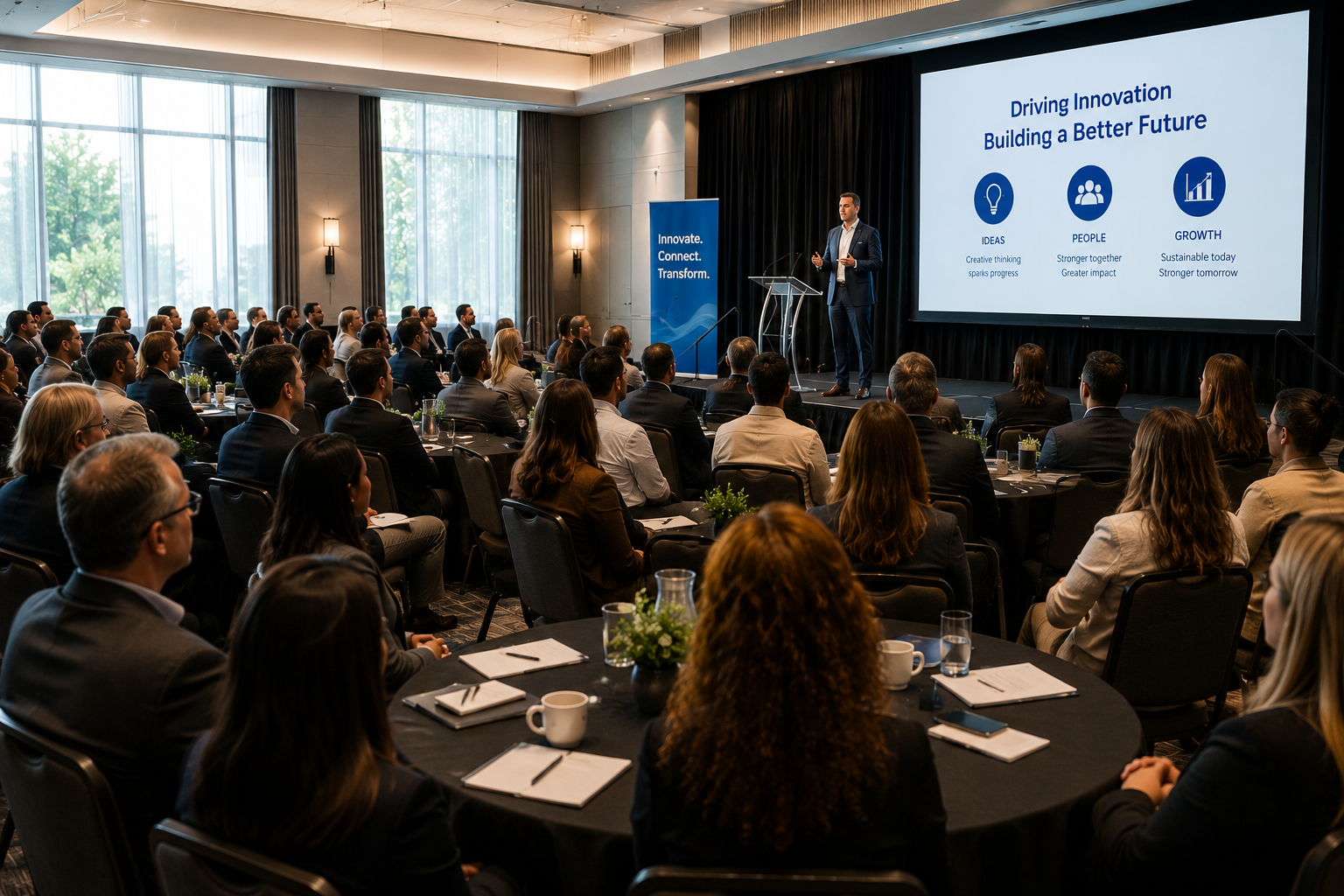
Stop Planning Event Coverage. Start Planning Event Content.
There’s an important difference.
Traditional event coverage asks: What needs to be photographed or filmed?
Opening remarks.
Keynote.
Breakout sessions.
Awards.
Networking.
Sponsors.
Group photos.
Done.
A content-focused approach asks another question: What will our organization need after this event is over?
That changes the conversation.
Marketing may need images for upcoming campaigns.
Social media may need months of visual content.
Communications may need executive photography.
Human Resources may need employer-brand and recruiting content.
Sponsors may need proof of their participation and visibility.
Sales may need customer stories.
Leadership may need video for future presentations.
The event team may need compelling assets to promote next year’s conference.
Suddenly, the shot list looks very different.
Your Event May Be One of Your Best Content-Creation Opportunities All Year
Think about who’s already in the building.
Your CEO is there.
Your leadership team may be there.
Employees who normally work across different offices or states are together.
Customers have traveled in.
Industry experts are speaking.
Partners and sponsors are present.
Your audience is engaged with your brand in real life. Recreating that group six months later for a marketing shoot could require significant time, scheduling, travel, and budget.
During your event? They’re already there.
That’s an opportunity.
Instead of asking only, “What moments should we capture?” consider asking: “What content would be difficult for us to create once everyone leaves?”
That one question can completely change the value you get from your event photography and videography.
Here’s the game plan to get the most value out of your event content.
1. Build Your Marketing Content Library
Event photography shouldn’t live in a gallery that gets opened twice and forgotten. Capture images intentionally for future marketing use.
That may include:
- executives interacting with employees and customers
- attendees engaging with your brand
- authentic team interactions
- speakers and subject-matter experts
- product demonstrations
- branded environments and signage
- vertical and horizontal compositions for different platforms
- negative space for marketing copy
- candid workplace and culture imagery
- customer and partner interactions
These assets can support websites, presentations, email campaigns, social media, PR, annual reports, proposals, internal communications, and future event promotion.
Instead of scheduling another corporate photo shoot three months later, you may already have much of what you need.
2. Capture Your Executives While You Have Them
Anyone who has tried coordinating multiple executives for a photo or video shoot knows exactly where this is going. If leadership is already attending the event, use the opportunity.
Beyond photographing executives on stage, consider capturing:
- updated executive portraits
- short thought-leadership interviews
- industry commentary
- company updates
- leadership messages
- recruiting messages
- customer-facing videos
- social media clips
- introductions for future presentations
A 15-minute interview recorded during an event can potentially become multiple pieces of content.
That’s far more useful than realizing three weeks later that you need the CEO on camera again.
3. Give Your Sponsors More Value
Sponsors aren’t simply buying logo placement. They’re buying access, visibility, association, and evidence that their investment mattered.
Your media plan can intentionally capture:
- sponsor signage
- sponsored activations
- representatives interacting with attendees
- branded sessions
- exhibit areas
- speaking opportunities
- audience engagement
- partnership moments
Those assets can provide additional value to current sponsors while also strengthening conversations with future ones.
If your organization runs a recurring conference, strong visual evidence of sponsor participation can become part of next year’s sponsorship story.
4. Capture What Happens Between the Agenda Items
Some of the most valuable moments at an event aren’t listed on the agenda.
They’re in the hallway after the keynote.
At the registration desk.
During coffee.
At the sponsor booth.
Between an executive and an employee.
When an attendee meets a speaker they’ve followed for years.
When colleagues who normally work hundreds of miles apart finally meet in person.
Those moments communicate something staged content often struggles to reproduce: what it actually feels like to be there.
That’s powerful marketing.
People considering your next event don’t only want to know who spoke. They want to imagine themselves in the room.
5. Think About Recruiting and Employer Brand
Event content doesn’t have to stay with the events or marketing department.
Corporate gatherings can produce some of an organization’s strongest culture imagery. Instead of relying exclusively on stock photography or scheduled office shoots, organizations can capture employees collaborating, learning, celebrating, volunteering, leading, connecting, and simply enjoying being together.
Those images can support recruiting campaigns, career pages, LinkedIn content, employee communications, onboarding materials, and employer-brand initiatives.
The event has already created the environment. The opportunity is recognizing it.
6. Capture Content for Next Year’s Event Now
One of the best times to market your next event is during your current one.
You have the audience, the energy, the speakers, and the social proof. Use it!
Capture attendee reactions.
Ask attendees why they came.
Interview speakers.
Document packed sessions.
Capture networking.
Show the environment.
Get testimonials while the experience is fresh.
When registration opens for the next event, you won’t have to tell people what the experience is like. You can show them.
7. Don’t Forget Different Formats
Where content will be used should influence how it’s captured.
A beautiful horizontal photograph may work perfectly across a website banner but poorly as a vertical social post.
A three-minute interview may be useful on a website, while several 20-second moments from that same conversation may work better on LinkedIn or Instagram.
Before the event, identify where the content is likely to live:
- website
- press releases
- annual reports
- internal communications
- recruiting
- sales presentations
- sponsor materials
- future event campaigns
Your media team can then capture with those uses in mind. This is why the conversation before the event matters almost as much as what happens behind the camera during it.
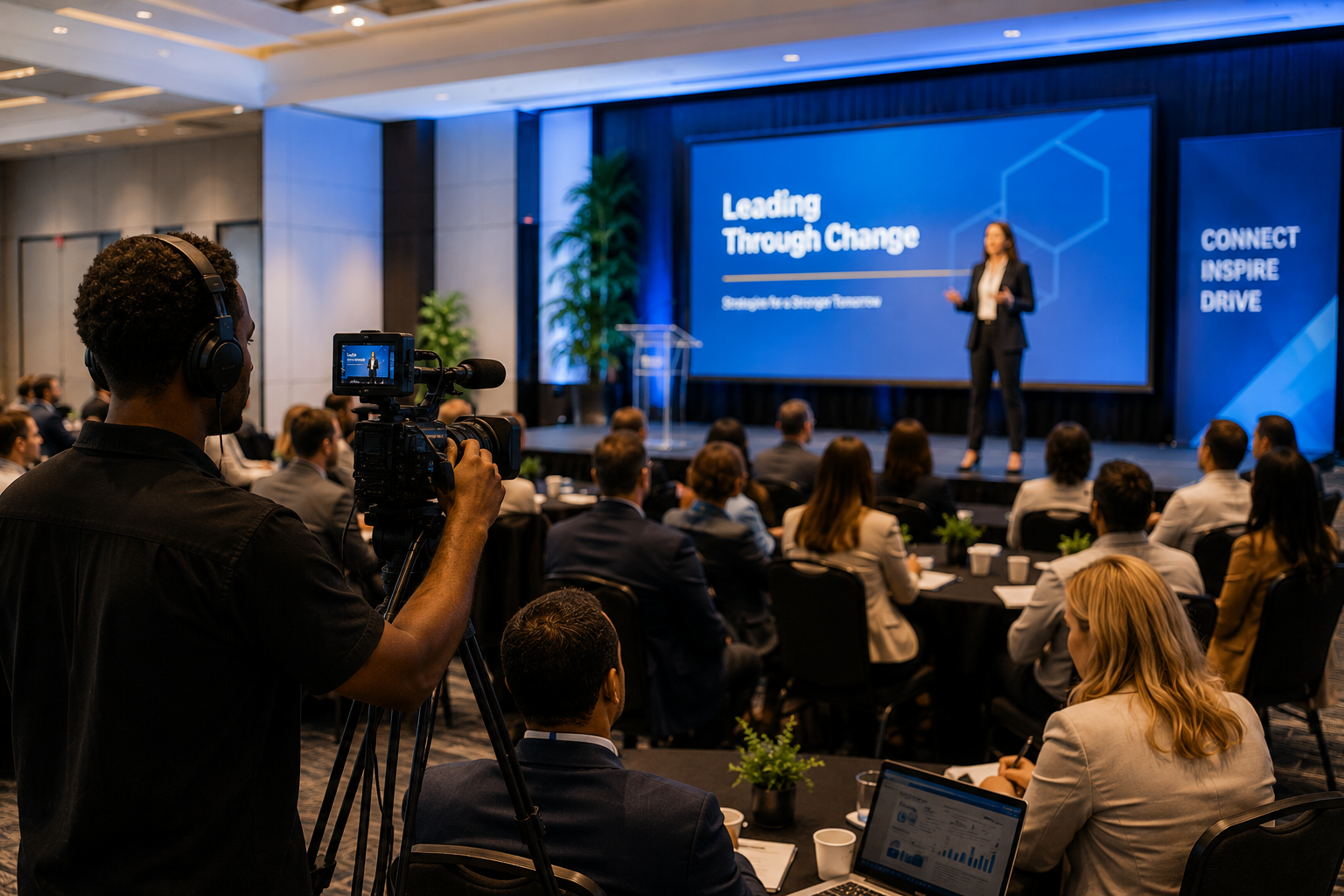
The Question Every Team Should Ask Before an Event
Before finalizing your photography or videography plan, bring the right stakeholders into the conversation.
Marketing. Communications. HR. Leadership. Sponsors. The Social Media team.
Ask them:
“What content will you wish we had 30, 60, or 90 days after this event?”
Their answers should help shape your media plan. Because your organization’s content needs probably extend far beyond photographs of the keynote and a highlight reel.
A Simple Framework for Planning Event Content
Before your next corporate event, think through five areas:
BRAND
What should someone understand about your organization after seeing this content?
PEOPLE
Who will be in the room that would otherwise be difficult to photograph or get on camera?
BUSINESS
What priorities — recruiting, sponsorship, sales, partnerships, thought leadership, culture — could this content support?
NEXT
What will you need to promote, communicate, or sell after this event is over?
Those answers give your photographer and videographer something much more useful than a list of rooms and start times. They give them purpose.
Your Media Team Should Understand More Than Cameras
Technical ability matters – a lot.
Corporate events happen once. The keynote doesn’t do a second take because someone missed the shot. But technical skill is only part of what makes event media successful.
Your media team also needs to understand timelines, stakeholders, brand priorities, event flow, executive expectations, changing schedules, production teams, venues, and the reality that your event planner already has 47 other things happening at once.
They should make the event easier to execute — not become another vendor you have to manage. And they should understand what you’re trying to accomplish with the content after they leave.
That’s the philosophy behind how we approach corporate event photography and videography at Frame & Flow Media. Our background isn’t only behind the camera. It includes decades of experience across events, operations, and project management.
That means we think about the event while we think about the content.
We’re thinking about what needs to happen now — and what your organization may need next.
Don’t Just Capture the Event. Multiply Its Value.
You’ve already invested in bringing the right people into the room
You’ve already created the experience.
You’ve already generated the conversations, ideas, connections, and moments.
The question is whether their value ends when the event does. It doesn’t have to.
Plan your event media around what comes next, and a few days of photography and video can become months of useful content.
Your event should keep working after it ends.
Your Media Team Should Understand More Than Cameras
Technical ability matters – a lot.
Corporate events happen once. The keynote doesn’t do a second take because someone missed the shot. But technical skill is only part of what makes event media successful.
Your media team also needs to understand timelines, stakeholders, brand priorities, event flow, executive expectations, changing schedules, production teams, venues, and the reality that your event planner already has 47 other things happening at once.
They should make the event easier to execute — not become another vendor you have to manage. And they should understand what you’re trying to accomplish with the content after they leave.
That’s the philosophy behind how we approach corporate event photography and videography at Frame & Flow Media. Our background isn’t only behind the camera. It includes decades of experience across events, operations, and project management.
That means we think about the event while we think about the content.
We’re thinking about what needs to happen now — and what your organization may need next.
Planning an Upcoming Corporate Event?
Frame & Flow Media provides strategic corporate event photography and videography for conferences, summits, corporate meetings, executive events, activations, and other business events.
We’re based in Atlanta, deploy teams throughout the United States, and are available internationally.
If you’re planning an event, let’s talk about what you want the content to accomplish — not just what you want photographed.
Frame & Flow Media
ffmediastudios.com
833-336-0260